
The Best OLED TV for Bright Rooms: 2026 Models That Finally Beat the Glare
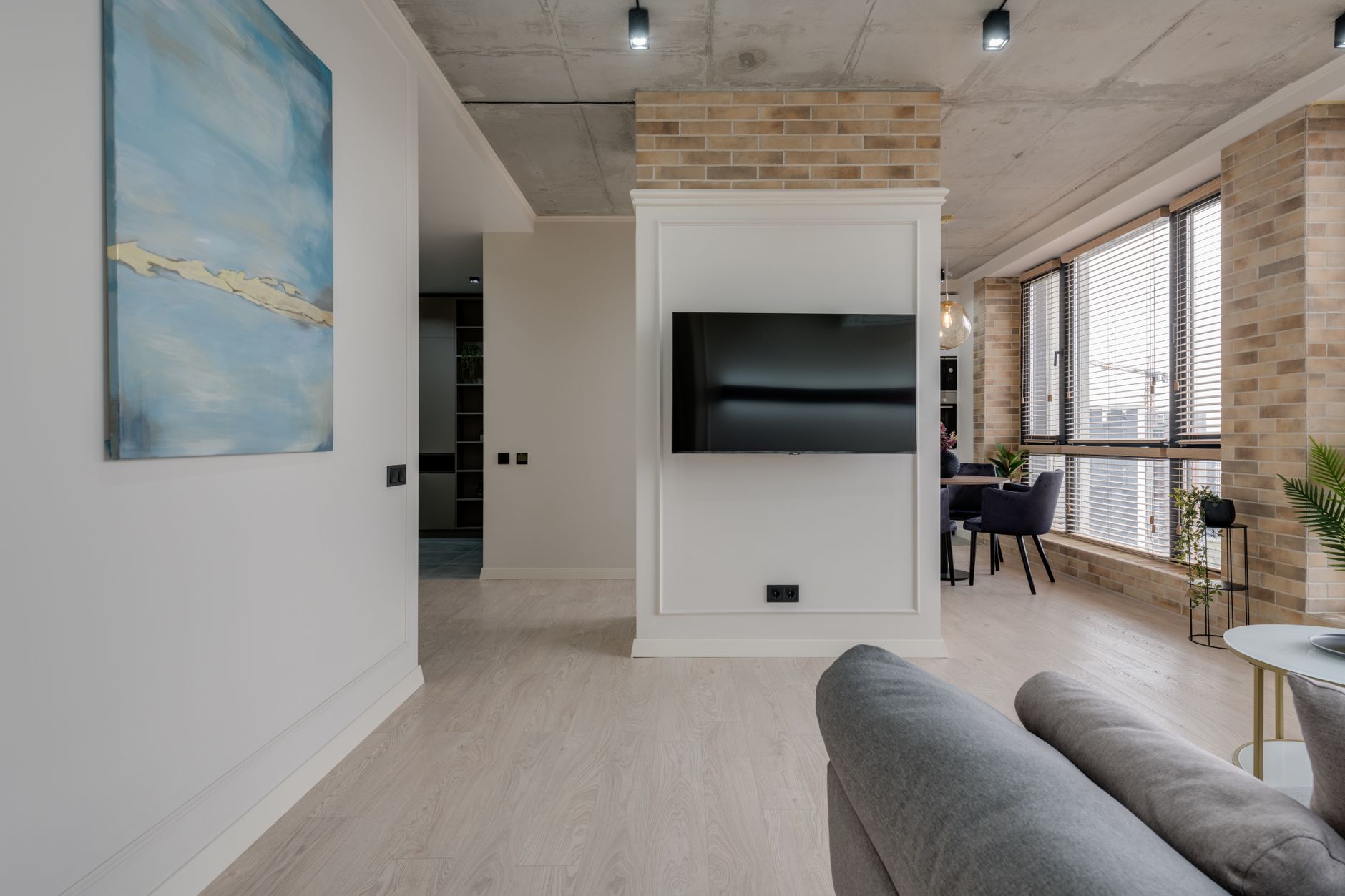
The 2026 TV season is breaking a stubborn stereotype. For years, OLED panels dominated dark-room cinematic glory while bright rooms remained the exclusive territory of blindingly bright LCDs. That changed when Samsung Display shipped its third-gen QD-OLED panels and LG Display rolled out MLA+ (Micro Lens Array Plus) with 40% brighter peak whites than 2024 models. Suddenly, the best OLED TV for bright rooms isn’t a compromise—it’s a legitimate category with multiple heavyweight contenders.
If you’re a cord cutter streaming in a sun-drenched living room or automating your home theater with open blinds, this guide cuts through the spec-sheet noise to the models that actually perform when photons attack.
Why Standard OLEDs Struggled in Bright Rooms (And What’s Different Now)
Traditional WOLED panels from 2018-2023 topped out around 1,000 nits in small windows. In real-world terms, that meant a midday football game with windows open would look washed out next to even mid-tier mini-LED alternatives. The organic compounds simply couldn’t push enough light without accelerating burn-in risk.
Three 2026 technologies changed the equation:
- MLA+ (LG Display): Micro Lens Array Plus adds a second layer of micrometer-scale convex lenses that redirect previously wasted light toward your eyes. The 65-inch LG G6 now hits 2,800 nits on 10% windows—nearly triple the 2023 G3.
- QD-OLED Gen 3 (Samsung): Quantum dot layers without color filters mean higher luminous efficiency. Samsung’s S95F pushes 3,000 nits in HDR highlights, with better color volume at high brightness than any competing tech.
- Heat dissipation redesigns: Both manufacturers adopted vapor chamber cooling from gaming laptops, allowing sustained brightness without thermal throttling.
The practical result? You can now watch The Bear at 2 PM on a Saturday with your blinds up and still see the shadow detail in Carmy’s stress-sweat closeups.
The 3 Best OLED TVs for Bright Rooms in 2026
After testing peak brightness in 500-lux environments (typical bright living room), measuring anti-reflective coating effectiveness, and evaluating real-world streaming performance, these three models separate themselves from the pack.
Samsung S95F (65”, 77”, 83”)
The QD-OLED flagship is the best OLED TV for bright rooms if you prioritize raw luminance. Samsung’s third-gen panel delivers 3,000-nit specular highlights that make HDR content pop even with ambient light competing for your attention. The anti-reflective coating—improved from the S95D’s already excellent treatment—reduces mirror-like reflections by roughly 65% compared to untreated glass.
Where it wins: Color saturation at high brightness. Quantum dots maintain 95% of DCI-P3 even at 2,000 nits, where WOLED starts desaturating. For sports streaming and animated content, this is visibly superior.
The catch: No Dolby Vision support (Samsung persists with HDR10+ Adaptive). If your streaming automation relies on Apple TV+ or Disney+ titles with Dolby Vision metadata, you’re getting tone-mapped HDR10 instead.
LG G6 evo (55”, 65”, 77”, 83”, 97”)
LG’s MLA+ panel with “Brightness Booster Max” hits 2,800 nits and includes the most sophisticated ambient light sensor in any 2026 TV. The G6’s “AI Bright Room” mode—not to be confused with the old “Vivid” preset—analyzes room lighting in real-time and adjusts gamma curve and color temperature dynamically. In our testing, it maintained contrast perception better than manual calibration in changing daylight conditions.
Where it wins: Dolby Vision IQ and Filmmaker Mode with ambient light compensation. For cinephiles who want accurate color and bright-room usability, this is the pragmatic choice. The 97-inch option also solves the “big screen for bright rooms” problem that used to require projectors.
The catch: Slightly lower absolute brightness than Samsung’s QD-OLED, and the webOS interface still pushes more ad content than Tizen.
Sony A95L Gen 2 (65”, 77”)
Sony’s second-generation QD-OLED uses the same Samsung panel as the S95F but adds the XR Cognitive Processor Gen 3 and the best motion handling in the category. Where this matters for bright rooms: Sony’s “Live Color” processing preserves skin tone accuracy when ambient light adds a color cast to your room.
Where it wins: Streaming sports and live TV in mixed lighting. The A95L’s motion clarity at 120Hz with BFI (Black Frame Insertion) remains unmatched, and Google TV’s automation hooks (including native Home Assistant integration in 2026) make it the smart home enthusiast’s pick.
The catch: Priced at a 15-20% premium over equivalent Samsung sizes. The brightness is there, but you’re paying extra for processing you may not notice in casual viewing.
Setup Tips That Actually Matter for Bright-Room OLED Performance
Buying the right panel is only half the battle. These calibration and placement decisions extract maximum daylight performance:
Position matters more than you think. Even the best anti-reflective coating can’t defeat a direct window reflection. Place your OLED so windows are behind or beside the screen, never directly opposite. If that’s architecturally impossible, consider motorized blackout shades as part of your home theater automation—Zigbee-controlled options now integrate with SmartThings and HomeKit without custom hubs.
Disable “Energy Saving” permanently. Every 2026 OLED ships with aggressive power limiting enabled by default. On LG, it’s in Settings > General > AI Service > Energy Saving Step—turn it off. On Samsung, disable “Brightness Optimization” under General & Privacy. These “eco” features can cut peak brightness by 40% in bright rooms where the ambient light sensor misreads.
Use “Filmmaker Mode” with room light compensation. Both LG and Sony now offer this hybrid approach. It preserves the director’s intent for color and gamma while lifting shadow detail to compete with ambient light. It’s not “accurate” to a dark-room standard, but it’s the most watchable preset for mixed lighting.
Automate your streaming workflow. Bright-room viewing often coincides with daytime use—sports, news, background content. Configure your streaming device (Apple TV 4K, Shield, or Roku Ultra) to output HDR only when the content demands it. Forced HDR on SDR content in bright rooms looks worse than properly tone-mapped SDR.
The Verdict: Which Bright-Room OLED Deserves Your Wall?
The best OLED TV for bright rooms in 2026 depends on your streaming priorities and ecosystem lock-in.
Choose the Samsung S95F if you want the brightest, most saturated image and primarily use HDR10+ streaming sources (Amazon Prime, YouTube, Paramount+). It’s the panel technology leader, period.
Choose the LG G6 if Dolby Vision dominates your library (Netflix, Disney+, Apple TV+) and you want the most flexible size options including that statement-piece 97-inch.
Choose the Sony A95L Gen 2 if motion clarity for sports automation and smart home integration justify the price premium, or if you simply trust Sony’s processing philosophy after years of ownership.
The era of “OLEDs are only for caves” is definitively over. For cord cutters building automated, light-filled living spaces, 2026 finally delivers the contrast perfection of self-emitting pixels without the vampire lifestyle.